The Best 32-Inch Portable Smart TV for Camping and RV Travel
Author:Yoda . 6/29/2026
For camping enthusiasts and RV travelers, a 32-inch portable smart TV is a key piece of equipment for enhancing the quality of outdoor life. As a manufacturer with years of deep experience in B2B digital display equipment, Yoda presents this guide to walk you through everything—from purchasing criteria and power solutions to installation methods and usage tips—helping you select the ideal 32-inch portable smart TV for your camping and RV adventures.
Why Do You Need a 32-Inch Portable Smart TV for Camping and RV Travel?
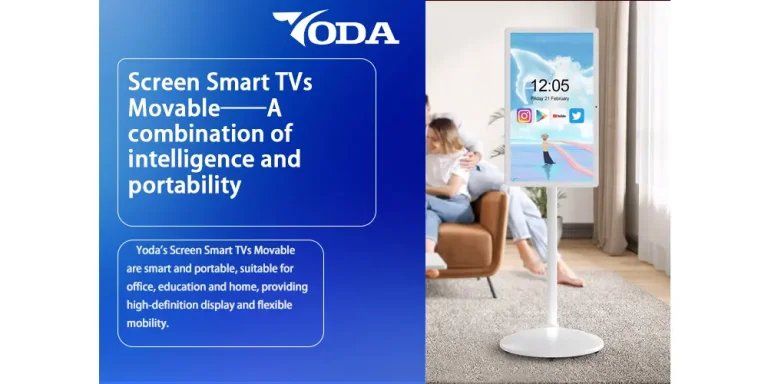
In outdoor settings, a 32-inch portable smart TV serves not only as an entertainment hub but also as an information terminal. Compared to larger televisions, the 32-inch portable smart TV strikes the perfect balance between portability, power consumption, and installation flexibility:
Yoda has accumulated extensive R&D experience in the field of portable display equipment; below, we provide a detailed, practical analysis of how to select and use these devices.

Five Key Criteria for Selecting a 32-Inch Portable Smart TV
1. Screen Panel and Display Quality
Lighting conditions in camping and RV environments can be complex and variable. We recommend choosing products with IPS panels to ensure wider viewing angles (typically ≥178°). Regarding resolution, 720p (HD) is the mainstream choice for 32-inch models; however, if the budget allows, 1080p (Full HD) offers a sharper, more detailed image. Additionally, the screen brightness should be at least 250 nits to ensure visibility against strong ambient light during the day.
2. Power Supply Compatibility
This is the most critical factor for outdoor use. A suitable 32-inch portable smart TV should support multiple power options:
Power Method | Suitable Scenarios | Notes |
12V DC (Vehicle Power) | RVs, camper vans | Ensure voltage compatibility; avoid damage from voltage fluctuations |
110V/220V AC (Mains Power) | Campsites with hookups | Suitable for commercial campsites with grid access |
USB-C PD Power | Portable use | Requires a power bank supporting the ≥45W PD protocol |
Built-in Battery | Fully off-grid | Check battery capacity; typical runtime is 2–4 hours |
3. Smart System and Content Ecosystem
At Yoda, we recommend prioritizing products equipped with the Android TV system, as it offers native support for major streaming apps like Netflix and YouTube and provides access to a vast app library. Also, ensure the device supports dual-band Wi-Fi (2.4GHz + 5GHz) to guarantee a stable network connection.
4. Protection and Durability
Outdoor environments place higher demands on device durability; consider the following:

Installation and Usage Guide for 32-Inch Portable Smart TVs
Here is the standard installation and usage process recommended by Yoda:
Step 1: Planning the Installation Location
Inside the RV, we recommend mounting the TV directly in front of the sleeping area or on the wall opposite the seating area to ensure a comfortable viewing angle whether sitting or lying down. The recommended installation height aligns the center of the screen with eye level while seated—typically 1.1 to 1.3 meters above the floor.
Step 2: Pre-installation of Power and Signal Lines
If opting for a wall-mounted setup, route the power and signal cables through the wall beforehand. Yoda advises: RV wiring must utilize flame-retardant grade cables, and all connection points must be properly waterproofed.
Step 3: Screen Mounting and Vibration Dampening
When using a VESA-standard wall mount, it is recommended to install rubber vibration-dampening pads between the mount and the wall to effectively absorb vibrations during travel. After tightening the screws, give the unit a firm shake to ensure the installation is secure.
Step 4: Power Connection and Testing
When connecting to the RV’s 12V power system, installing a voltage stabilizer or UPS module is recommended to prevent voltage fluctuations during vehicle startup from damaging the TV’s motherboard. Once powered on, test the signal source switching, Wi-Fi connectivity, and streaming playback.
Step 5: Content Configuration and Account Login
Upon initial use, complete the following setup steps:
Step 6: Daily Maintenance and Storage

Why Choose Yoda?
As a professional B2B manufacturer of display equipment, Yoda has tailored a 32-inch portable smart TV product line specifically for camping and RV travel scenarios:
Contact Yoda for an exclusive B2B quote on our portable smart TVs → www.szyoda.com
FAQ — Frequently Asked Questions
Q1: Can the 32-inch portable smart TV operate on 12V power in an RV?
Yes. Yoda’s portable smart TV series supports direct 12V DC power input with a low power consumption of just 25–45W, making it fully compatible with RV battery systems. We recommend installing a voltage regulator module at the power input to protect the device from voltage fluctuations.
Q2: How can I watch TV while camping if there is no Wi-Fi?
You can download movies for offline viewing beforehand or use a mobile hotspot for internet access. Some models also support direct playback of local video files via the USB port, requiring no network connection.
Q3: Is the power consumption high for a 32-inch portable smart TV?
Taking Yoda’s 32-inch model as an example, the typical power consumption is around 30W. A 100Ah RV auxiliary battery can power it for approximately 30–40 hours of continuous playback (accounting for conversion losses); pairing it with solar panels allows for even longer operation.
Q4: Can the TV be used normally in low outdoor temperatures?
Our commercial-grade 32-inch portable smart TVs typically operate within a temperature range of -10°C to +50°C. In extremely cold environments, we recommend powering on the unit to warm it up for 5–10 minutes before activating the screen to help preserve the panel’s lifespan.
Q5: Can the TV be watched while the RV is in motion?
For safety reasons, watching TV while the vehicle is moving is not recommended. However, the TV can be kept in standby mode so it can be started up quickly upon arrival at the campsite. When installing the TV, ensure the wall mount is secure so that vibrations during travel do not cause the unit to detach.