Digital Window Displays vs Traditional Window Posters
Author:Yoda . 3/23/2026
Digital window displays are window solutions that dynamically display commercial content on high-brightness digital screens, supporting remote real-time updates; while traditional window posters are a traditional display method that involves pasting static printed content onto window glass. The core difference lies in the fact that digital window displays allow for easy content changes and dynamic visual effects, resulting in a lower total cost of ownership in the long run; traditional posters require less initial investment, but each update necessitates reprinting, leading to higher long-term operating costs.
What are Digital Window Displays?
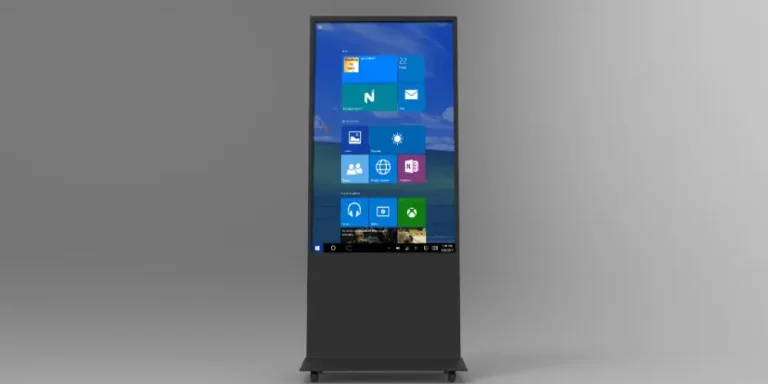
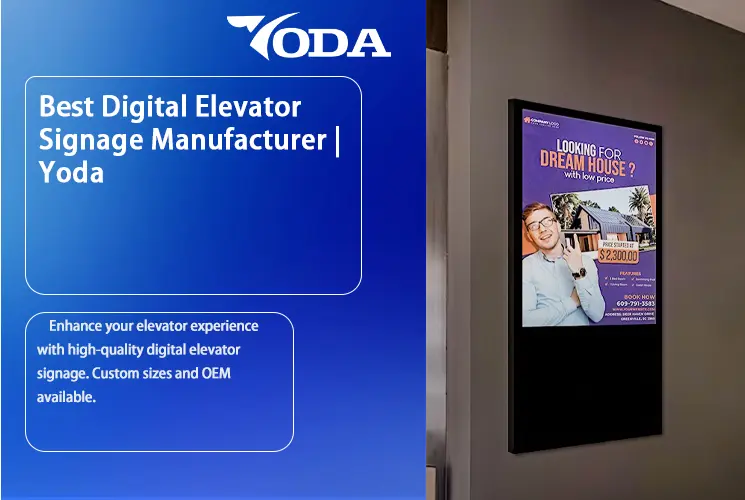
Digital window displays are professional display systems installed on the inside or outside of commercial windows, displaying digital content on high-brightness LED or LCD screens. Its core features include:
As a digital signage brand focused on the European market, Yoda offers a full range of window display solutions ranging from 1,000 nits to 5,000 nits, adaptable to store environments with varying sunlight intensities in the UK, Germany, and France.
What are Traditional Window Posters?
Traditional window posters are static displays that fix printed content on paper, PVC, or film to window glass. They are a fundamental visual marketing tool used in the retail industry for decades.
Common formats include printed posters, PVC adhesive films, magnetic picture frames, and fabric hanging banners. Their advantages lie in low production barriers and low short-term costs; their limitations are that once the content is printed, it cannot be modified, and each update involves repetitive investment in design, printing, logistics, and labor.

A Comparative Analysis of Digital Window Displays and Traditional Window Posters from Six Dimensions
1. Content Update Capability
This is the most fundamental difference between the two solutions.
Digital window displays support pushing new content anytime via a cloud-based CMS, with one-click synchronization across multiple stores, making content update costs close to zero. Traditional window posters require a complete “design-print-delivery-replacement” process for each update. For example, a brand with 20 UK chain stores would incur printing and labor costs of £12,000–£19,200 annually.
2. Visual Appeal
Research shows that dynamic digital content can attract 400% more attention span compared to static images. Digital window displays support 3D product demonstration videos, real-time promotional countdowns, weather-linked ads, and social media UGC content streams. Yoda displays support 4K ultra-high-definition resolution and HDR dynamic range, and with ultra-high brightness panels, they maintain vibrant and clear images even in the bright sunlight of European stores. Traditional window posters are limited by static images and cannot dynamically adjust with marketing trends.
3. Total Cost of Ownership (TCO)
Traditional posters have numerous hidden costs: design fees, printing costs, logistics costs, replacement labor costs, and waste disposal costs. While digital window displays require a one-time investment, subsequent upgrade costs are extremely low. The annual CMS fee is typically only £200–£500, and electricity consumption is approximately 0.05–0.15 kWh per hour. Overall, the payback period for Yoda digital window displays is typically 18–36 months, with faster payback periods for larger chains.
4. Personalized and Refined Operations
| Capabilities | Digital Window Displays | Traditional Window Posters |
| Time-Specific Content | Supported (automatic switching between morning/afternoon/evening) | Not Supported |
| Weather/Geographic Linkage | Supported; API Access | Not Supported |
| Automatic Multilingual Switching | Supported | Reprinting Required |
| A/B Testing | Supported | Not Supported |
| Emergency Content Push | Supported (effective within minutes) | Not Supported |
5. Environmental Protection and Sustainability
In the global market, ESG compliance has become a crucial consideration for brand sourcing. Traditional window posters generate paper, ink, and plastic waste with each replacement, following a linear consumption model. Digital window displays transmit content digitally throughout the entire process, eliminating the lifecycle consumption of printed materials. Yoda employs low-power LED backlighting technology and automatic brightness control, reducing energy consumption by approximately 30% compared to similar products, and complies with EU RoHS and REACH environmental standards.
6. Installation and Maintenance Ease
Yoda window displays support multiple installation methods, including suction cup, wall-mounted, and floor-standing brackets, requiring no modification to the store structure, making them suitable for leased shops. The accompanying cloud-based CMS interface is user-friendly, allowing store staff to operate it independently after just half an hour of training. The hardware has a theoretical lifespan of 50,000–100,000 hours (over 11 years based on 12 hours of daily operation), and Yoda provides a standard 3-year warranty and extended warranty services.
Which industries are best suited for Digital Window Displays?
The following business types will see the most significant return on investment from digital window displays:
Retail chains (apparel, FMCG, 3C electronics), restaurant chains (real-time menu and promotion displays), banks and financial institutions (dynamic updates of interest rates and products), real estate agencies (real-time property listings), car dealerships (immersive vehicle displays), and luxury and high-end brand flagship stores (brand visual experience).
Yoda has provided professional digital window display solutions to over 500 chain brands in major markets such as the UK, Germany, France, and the Netherlands.
Scenarios where traditional posters are still applicable:
Traditional window posters should not be replaced in all scenarios. Traditional posters still hold merit in the following situations: small independent shops with extremely limited budgets, one-off pop-up events lasting less than a week, special outdoor settings with limited power supply, and purely decorative art installations (galleries, craft shops, etc.). Beyond these scenarios, from a comprehensive perspective of operational efficiency, brand impact, and long-term costs, digital window displays are a more strategically valuable choice.
digital window displays FAQ
The core difference is the variability of the content. Digital window displays support remote updates of dynamic content at any time, while traditional window posters have fixed content once printed, requiring reprinting and manual replacement for each change.

Yes, but the key lies in the choice of brightness specifications. Ordinary indoor displays have a brightness of approximately 250–400 nits, unsuitable for shop windows. For shop window environments, at least 1,500 nits is recommended, and for strong direct sunlight, 3,000 nits or higher is recommended. Yoda offers ultra-bright window displays with up to 5,000 nits of brightness, designed specifically for the bright, sunny environments of European stores.
Usually not. Yoda products support suction cup, wall-mounted, and floor-standing installations, without damaging the window glass or affecting natural lighting, making them suitable for leased stores.
No. Yoda’s accompanying cloud-based CMS system has a simple and intuitive interface, supporting operation via computer, tablet, or mobile phone. Ordinary store employees can independently complete content updates and scheduling management after a half-hour training session.
Typically 18–36 months. The main factors affecting the payback period are the number of stores and the frequency of content updates—the more chain stores and the more frequent the updates, the faster the initial hardware investment is amortized, and the more significant the long-term cost savings.
Professional-grade LED displays have a theoretical lifespan of 50,000–100,000 hours, which translates to over 11 years of use based on 12 hours of daily operation. Yoda offers a standard 3-year warranty and supports extended warranty services to maximize customer investment security.
Each replacement of a traditional poster generates paper, ink, and plastic waste. For European brands that prioritize ESG compliance, this clearly contradicts their sustainability commitments. Digital window displays, with their fully digitized content, fundamentally eliminate the waste problem associated with printed materials.
Conclusion
Storefronts are the most direct visual dialogue between brands and consumers. Digital window displays, with their dynamic content, remote management, data linkage, and long-term economics, are becoming a core infrastructure of modern retail stores; the applicability of traditional window posters is rapidly narrowing.
For businesses aiming to enhance store competitiveness and reduce long-term operating costs, embracing digital window display technology is a strategic investment worth serious consideration. Yoda focuses on providing professional, reliable, and cost-effective digital window display solutions for businesses worldwide. Contact us for a free consultation.
This article is produced by Yoda Digital Signage, which focuses on providing professional digital signage solutions for global retail brands.